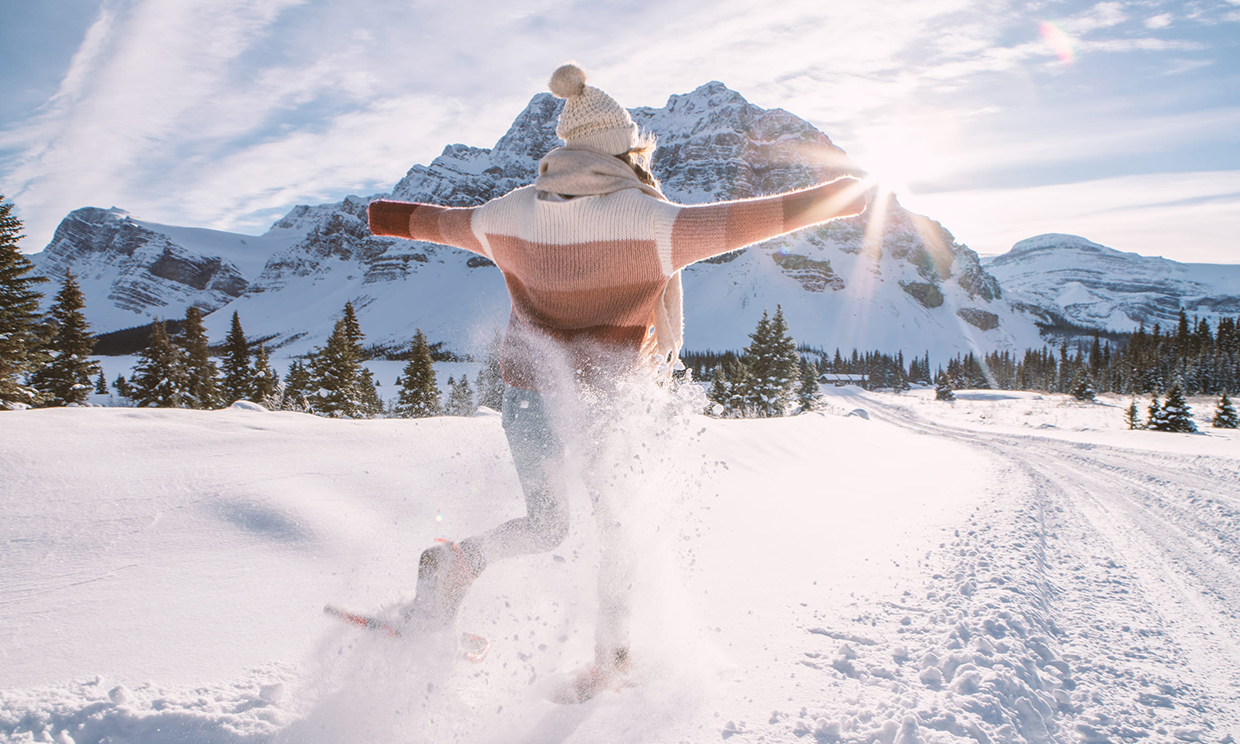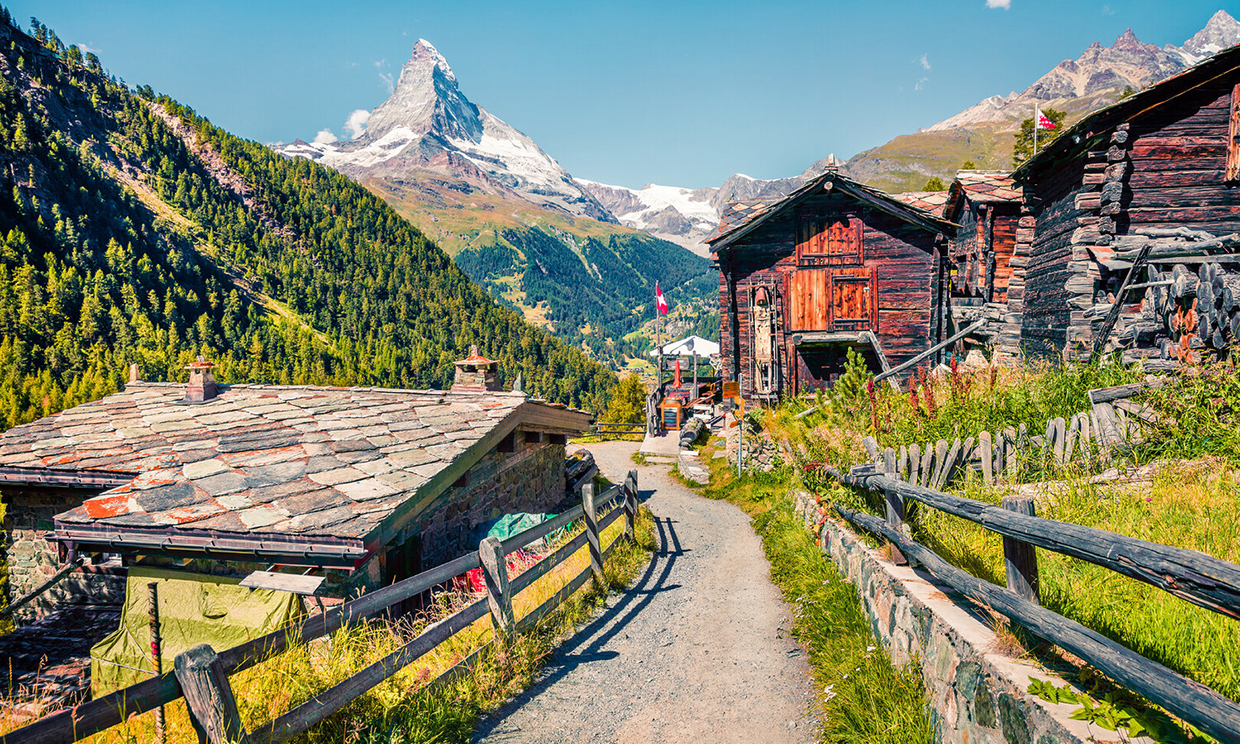
The moment I arrived in Zermatt, I realized this was no ordinary Swiss town; it felt like a world apart, cradled by snow-capped peaks.
LOOKING FOR A RENTAL CAR?
If you're looking for an affordable rental car, we recommend the website,
Avis.
Explore the world with ease using these fantastic websites: Easyjet offers budget-friendly flights and vacation travel,and SpotHero Unlock the easiest way to find and book parking with SpotHero – your reliable hero for stress-free parking solutions.
» Book rental car now «
As the train wound its way into the valley, the scenery outside the window shifted: the greenery gradually gave way to white snow-capped summits and rocky crags. The air grew crisper, and the light seemed clearer. When the train finally came to a halt and I stepped out of the station, I saw it—the iconic Matterhorn—piercing the sky like a sharp, golden pyramid.
In that instant, I understood why so many people make the journey here just to see it.
First Impressions of Zermatt: A Car-Free Mountain World
Zermatt is a unique town—one where cars are strictly prohibited.
As I walked along the streets with my luggage, the only sounds were the soft hum of electric vehicles, the clip-clop of horse-drawn carriages, and the distant murmur of melting snow rushing down the mountainside.
Charming wooden lodges and restaurants lined the streets, their roofs blanketed in thick layers of snow. The air was incredibly pure—so clean, in fact, that the sensation of breathing it felt almost unfamiliar.
My hotel was located just a short distance from the town center, offering views of the valley and snow-capped peaks right from my window.
After dropping off my bags, my first move was to head to a viewpoint to find the perfect angle for viewing the Matterhorn.
First Glimpse of the Matterhorn: A Mountain That Shifts the Mood
I stopped in my tracks the moment I reached the viewing platform.
There stood the Matterhorn.
Unlike ordinary mountains that roll and undulate, it rose sharply between earth and sky, possessing an almost geometric precision. Half the mountain was gently veiled in mist, while the other half gleamed brilliantly in the sunlight.
The surrounding tourists were hushed; people simply took photos in silence or stood there, lost in awe.
I was one of them.
I tried to capture the scene with my camera, but I quickly realized that a photograph couldn’t convey that overwhelming sense of scale and majesty.
That mountain wasn’t merely “scenery”; it was a powerful natural presence—an icon that commanded attention.
Mountain Train: The Journey to Gornergrat
Early the next morning, I boarded the cogwheel train bound for Gornergrat.
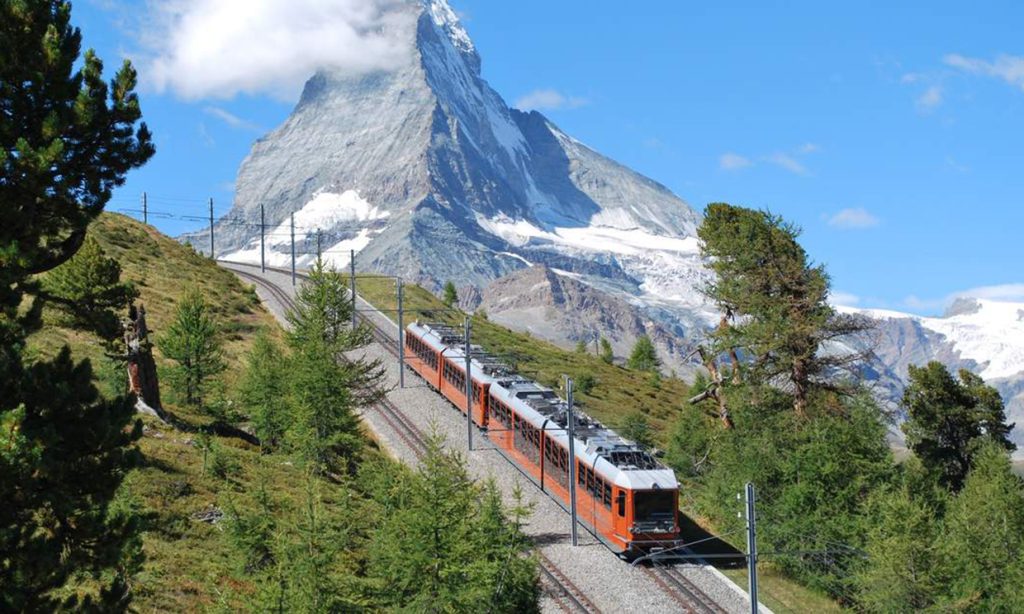
The train climbed steadily; as the altitude rose, the scenery outside the window shifted from the village below to a world of ice and snow.
As we ascended, the Matterhorn came into view from various angles—sometimes veiled by clouds, other times suddenly revealing its full, majestic form.
Tourists in the carriage would gasp in awe, only to fall silent again, captivated by the view outside.
When the train arrived at the summit station, the air was noticeably colder.
Stepping out onto the platform, I was greeted by a panoramic vista of Alpine peaks.
Snow-capped mountains stretched out one after another, seemingly without end.
Glaciers and Wind: A Feeling of Being Atop the World
At the Gornergrat observation deck, I truly grasped for the first time what it means to be at such a great height.
Beneath my feet lay a vast expanse of white snow; in the distance, rolling mountain ranges; and the sky felt so close I could almost touch it.
The wind was strong and bitingly cold, yet the sunlight was dazzlingly bright.
I strolled slowly along the observation path, my steps alternating between packed snow and exposed rock.
Occasionally, people stopped to take photos, while others simply sat on the ground, lost in thought.
I found a quiet spot to sit and watched the Matterhorn shift in appearance as the light changed.
For a brief moment, the clouds parted, revealing the entire mountain—its sharp, defined silhouette looking almost unreal.
In that moment, I didn’t take a picture; I simply gazed at it.
Glacier Hike: Stepping into a World of White
On the third day, I signed up for a glacier hiking excursion.
The guide handed out crampons and gave a brief overview of the route. The moment I stepped onto the ice, I realized that a glacier isn’t just scenery—it is a landscape you can actually walk upon.
Beneath my feet lay a thick layer of ice, crisscrossed with pale blue fissures.
Every step required caution, yet the experience was filled with excitement.
The surroundings were utterly quiet, save for the sound of the wind and my own footsteps.
Looking up occasionally, I could still see the Matterhorn in the distance.
In an environment like this, one becomes deeply focused—and feels incredibly small. I suddenly realized that this experience was not about “challenging nature,” but rather “entering into nature.”
The Town of Zermatt: A Warm Side at the Foot of the Snowy Peaks
Upon returning to the town, the pace of life in Zermatt shifted instantly.
The streets felt cozy; the aroma of toasted bread wafted from cafés, and tourists sat by the windows to warm themselves.
I stepped into a local restaurant and ordered a Swiss cheese fondue.
The cheese melted slowly in the pot, and the bread, once dipped, was rich with a creamy, milky flavor.
It stood in stark contrast to the icy chill of the snow-capped mountains outside.
This interplay of cold and warmth made the layers of the place feel all the more tangible.
At night, the town was incredibly quiet; only the faint outline of the distant snowy peaks was visible in the moonlight.
Sunrise: The Golden Moment of the Matterhorn
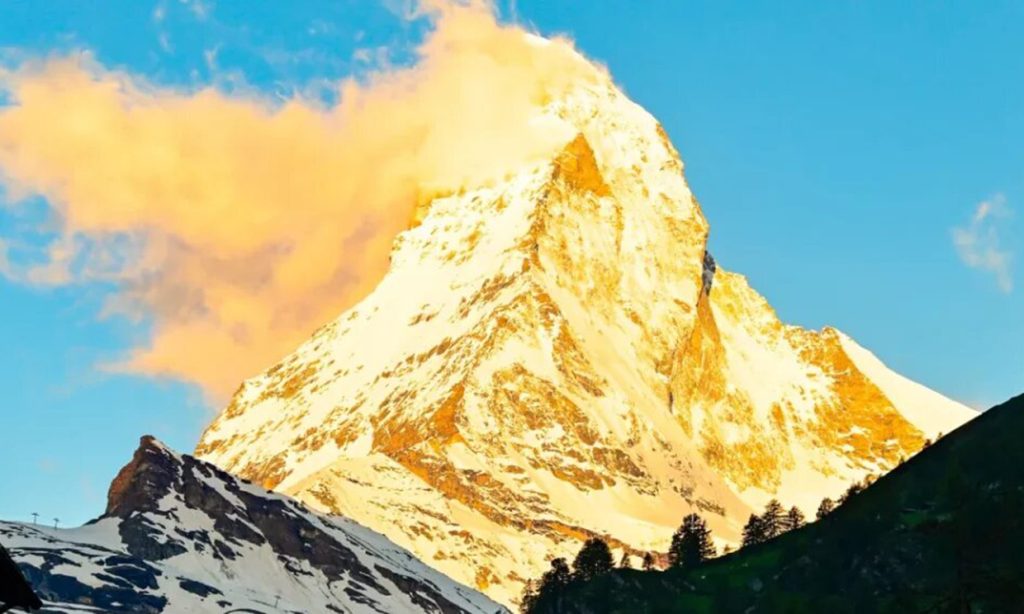
On my final day in Zermatt, I made a point of rising early to catch the sunrise.
I was already waiting at the viewing spot before dawn broke.
The air was biting cold—my hands had gone nearly numb—yet I stood my ground.
Then, a miracle unfolded as the first rays of sunlight touched the Matterhorn.
The entire mountain gradually turned gold, the glow spreading downwards from the summit.
It was no ordinary sunrise; it was a process of being “lit up.”
Those around me let out soft gasps of awe, then quickly fell silent.
For a scene like this requires no words.
Leaving Zermatt: Snowy Peaks Etched in Memory
As I left Zermatt, I glanced back at the valley one last time.
The Matterhorn remained there, standing in quiet majesty.
The train pulled slowly away, and the town gradually shrank into the distance.
I realized that this journey had left me with more than just scenery; it had created a profound sense of place—a vivid spatial memory.
Zermatt is not a place defined by bustle or noise, but by an experience woven from awe and tranquility.
And the Matterhorn remains—like an eternal backdrop—in the hearts of all who have visited.